Changing Abuela's Diaper
Finding my place in my Tribe of Mothers and honoring the ties that bind, one diaper at a time

On the second or third day after our arrival in Quito, my mother came up to the third floor to get Abuelita ready for bed. “Janan!” She summoned me, a diaper the size of an adult t-shirt in her hand. “Come watch how I change Abuelita because soon I’m going to need you to help. I can’t come upstairs like before because of my knees.”
Abuelita and us –my mother’s three oldest children—became floor neighbors a few years after my mother’s remarriage, when the house expansion happened. First my oldest sister moved up, then my older brother and I followed. Abuelita moved in with us permanently after she was widowed. Over forty years deep into schizophrenia, her unpredictable quirkiness weaved into the angst of our teenage years.
This was the late 1990s early 2000s, when the current mainstream and monetized version of “mental health” was unimaginable. Mental illnesses were tightly-guarded private matters and any allusion to their existence was a slap of shame. But Abuelita didn’t get that memo. She had pressing things to say, uncomfortable questions to ask, and fantastical stories to share. And she didn’t discriminate. Everyone, both the willing and the unwilling alike, got their fair share of her Marquesian magical-realism.
Abuelita’s prolific story-telling meant that my siblings and I lived in constant apprehension of what she might blurt out in front of our friends and guests. In public, there was façade of normalcy to preserve. But behind closed doors we didn’t give two damns. We wanted La Abuela just the way she was.
“Abuelita, cuénteme algo,” Tell me something, Abuelita. Anything. Wearied by the overlapping minefields of our personal and public lives, my older sister and I would come crashing into Abuelita’s bed after school. And off she would go, recalling memories from her own elementary school days and spinning them with fiction and fantasy. “Sigo?” Should she continue? “Yes, yes, Abuelita, siga siga.”
In a few sentences she would transport us from our heartaches and headaches into her humble childhood in La Vicentina, summers of plush grapes, ripe figs and crisp watermelons in Chtoura, and then back to La Mariscal, now with herself as the matriarch of a household of eight plus several maids, sitters and drivers.
In her prose, the dead were alive, the sick were cured, the distant were close, and geography didn’t matter. Boundaries were negotiable. Time elastic. Reality was as curatable as a dashboard, and hers was filled with all the things her heart willed to be true: Her youngest had called that morning and invited her out (he hadn’t), her grandchildren hadn’t stop phoning her (they had), and her deceased husband who had adored every inch of her existence was waiting for her to visit him, fresh flowers in hand (when would we drive her to him?).
At seventeen, I was convinced that her supple version of reality was far preferable to my rigid and flat one. But beyond the worlds she spun and realities she conjured, it was her heart, soul, and body that kept us returning to her.
Because there was never harshness in Abuelita’s speech. No aggression in her prose. No rough edges around her conjectures and plots. It was all soothingly ridiculous. It was lovingly insane. And it asked nothing of you. Fathom that! Not even a response. And if you softened up to her stories and leaned against her plump, soft body, she’d start stroking your head and rubbing your back. Leisurely. Gently. Carefree. And boy was that selfless motherly touch alone worth her weight in gold!
If that wasn’t the closest thing to heaven we knew back then, I don’t know what was.
“Janan! Are you coming?” My mother repeated, still diaper in hand.
“Si mamita, ya voy…” I tiptoed into Abuelita’s bedroom.
Oh Lord. What was I about to witness here? Was I about to see my Abuela lying half-naked on her bed, her legs positioned for a cleaning the same way I position my toddler for a change?
I’d been in Ecuador for less than seventy-two hours and though I adored my grandmother, suddenly that felt like a closer look than I had ever wished for.
But my mother hadn’t asked me, in the American way I’m familiar with now: “Would you like to come learn?” No—she had told me, in a good Lebanese matronly way, “Come watch.”
So I obeyed.
My mother stood outside Abuelita’s bathroom, leaning against the wooden closet door to spare her knees. She had already spread the large diaper over the bed.
“¿Ya acabó, mamá?” she called out. I shuddered at the sound of my mother’s commanding voice. Dios mio. I sound exactly like that with my children. Am I my mother? Are we even separate people?
Abuelita walked out on her own. I saw that she wasn’t fully dressed, and yet I felt nothing. There was no shock or weirdness at all, but rather a quiet, visceral recognition: My blood and flesh. Mother of my mother. My mother. Myself. My daughter.
Al-jadda fi manzilat al umm. The maternal grandmother is on the same rank as the mother in Islam. So is the maternal aunt. And the mother ranks first in a person’s life. Ummak, thumma ummak, thumma ummak, thumma abik. Your mother, then your mother, then your mother, then your father, said the Prophet Muhammad (pbuh).
When I wrote my PhD thesis on child custody in Islamic law, I learned that a mother has priority in custody in the event of a divorce. And if the mother is dead or unfit to be custodian, custody goes to the maternal grandmother. And if the latter is dead or unfit, then it goes to the maternal aunt. In turns out that Islam does not understand a child to have one single mother, but several, all deeply intertwined and interconnected through uterine bonds. “A tribe of mothers,” I called in my dissertation.
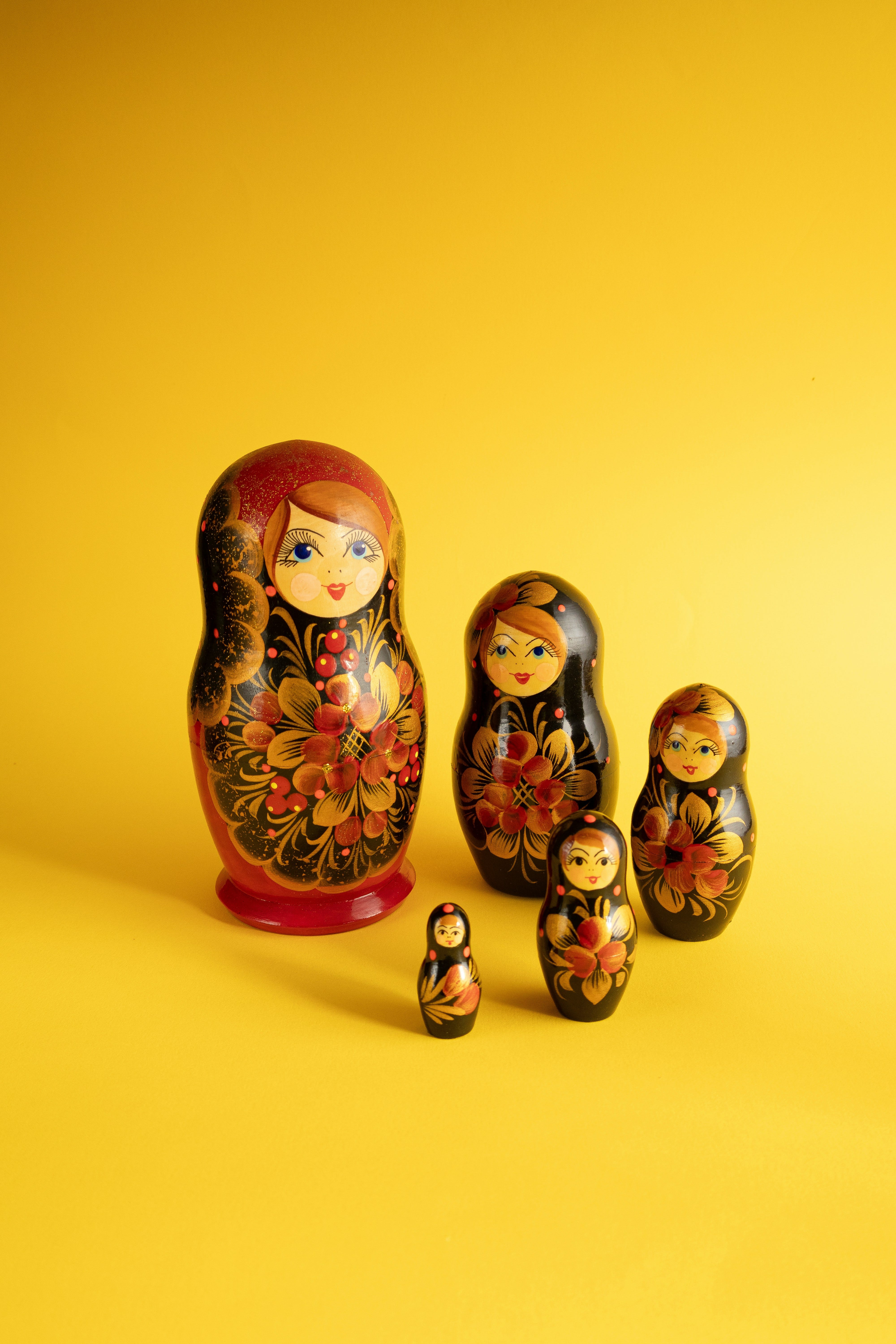
A matryoshka of women, we are. The outermost one, encompassing us all, is La Abuela, the innermost one, the youngest, my baby. And in the middle, my sisters, my aunts, myself—all now having exerted themselves to care for this matriarch of ours.
Because summoned into Abuelita’s bedroom to perform this task, I knew that this was a lot more than a rudimentary chore.
I had come back from a distant land to take my place – or to be handed my place, really-- by a higher-ranking woman in my tribe of mothers. I belonged here, claiming my share to this intimate and sacred space. We were here not to “change a diaper,” but to preserve Abuela’s God-given dignity and honor, as our Kind and Merciful God had commanded us to.
Frail, shaky, and a cane in hand, Abuelita stood vulnerable and exposed between my mother and I. My mother stood in front of her and held up the front flap of the diaper, I stood in the back and held the back flap. Zip. Zip. Zip. We stretched the grip tabs, pulled this way and that, and fastened them. Then my mother pulled out a roll of adhesive duct tape. “The diaper isn’t secure enough on its own,” she explained.
“What are you guys doing there?” My children popped their heads through Abuelita’s door.
“We’re changing Abuelita’s diaper,” I explained.
“She wears a diaper?! How?! Can we come see?!?”
“Kadija can come in. Zayd, you wait outside.”
“Yes!!” Khadija walked in triumphant. “What do I do? I want to help dress Abuelita too.” Her enthusiasm caught me by surprise. Did Khadija see in Abuelita an oversized live version of her diaper-wearing dolls? After years of requesting these dolls for Eid and practicing on them, was this her time to shine as a caregiver?
Later, my son, age eleven, pulled me to the side, as he regularly does to tell me secrets.
“Mama,” he said in a hushed voice, “There is something so weird…. It’s like Khadija is proud of having seen Abuelita in a diaper… like she was showing off to me that she got to see her… you know… like, not dressed… and I didn’t… isn’t that so weird?”
“Zayd, I think she was proud that she was welcomed into the private activities of the womenfolk of this house…. She is a little woman herself now, not just a “child.” She felt that. And it made her proud.”
“But that’s not fair mama. How come she’s always allowed in and I’m not?”
“Zayd, when you and baba go places together and do things alone, and Khadija is not included, is that not fair?”
He was quiet.
“And don’t you think a lady would be embarrassed to change in front of a young man like yourself?”
He blushed. “Of course. And I don’t want to see that either. I just don’t like being excluded and I don’t like Khadija bragging.”
“There is always something for everyone, habibi, but in a village (and we are one) it’s not always the same thing for everyone.”
--
Our summer days in Ecuador slip between our fingers. After my sister Hania arrives to fill her place on the third floor of the house, we take turns changing Abuelita or we change her together. She takes one side, I take another, and sometimes we play tug-of-war over who has stretched Abuela’s diaper too much to her side. “This side can’t close!” She protests. “Mine barely closes either!” I respond, yanking the diaper flap to my side of Abuela’s hip and she bends down between us.
“No se peleen!” She reprimands us from below. “Don’t fight!”
“We’re not fighting, Abuelita!” We laugh so hard we bend over too.
It does help that we adore her.
The task of cajoling her out of bed to pee one more time before bed and to wash and change can get heavy. And the stench of leaked urine can get strong. And sometimes when we come get her she does shoo us away: Leave me the heck alone already! I don’t have to pee! (Dejenme en paz. Ya oriné!). And there are nights when Hania and I look at one another and our eyes say: I’m wiped out today, who’s turn is it? And in the end, one of us gets up and walks into Abuela’s room with an overly-exaggerated enthusiastic tone: A ver Abuelita Hermosa!! Al bańo!!
Two nights ago, I am tucking her in bed when she tells me: “Gracias Mademoiselle,” a remnant word of her years in Frenchified Beirut.
“Nunca olvidaré lo que haces por mi.”
I will never forget what you do for me.
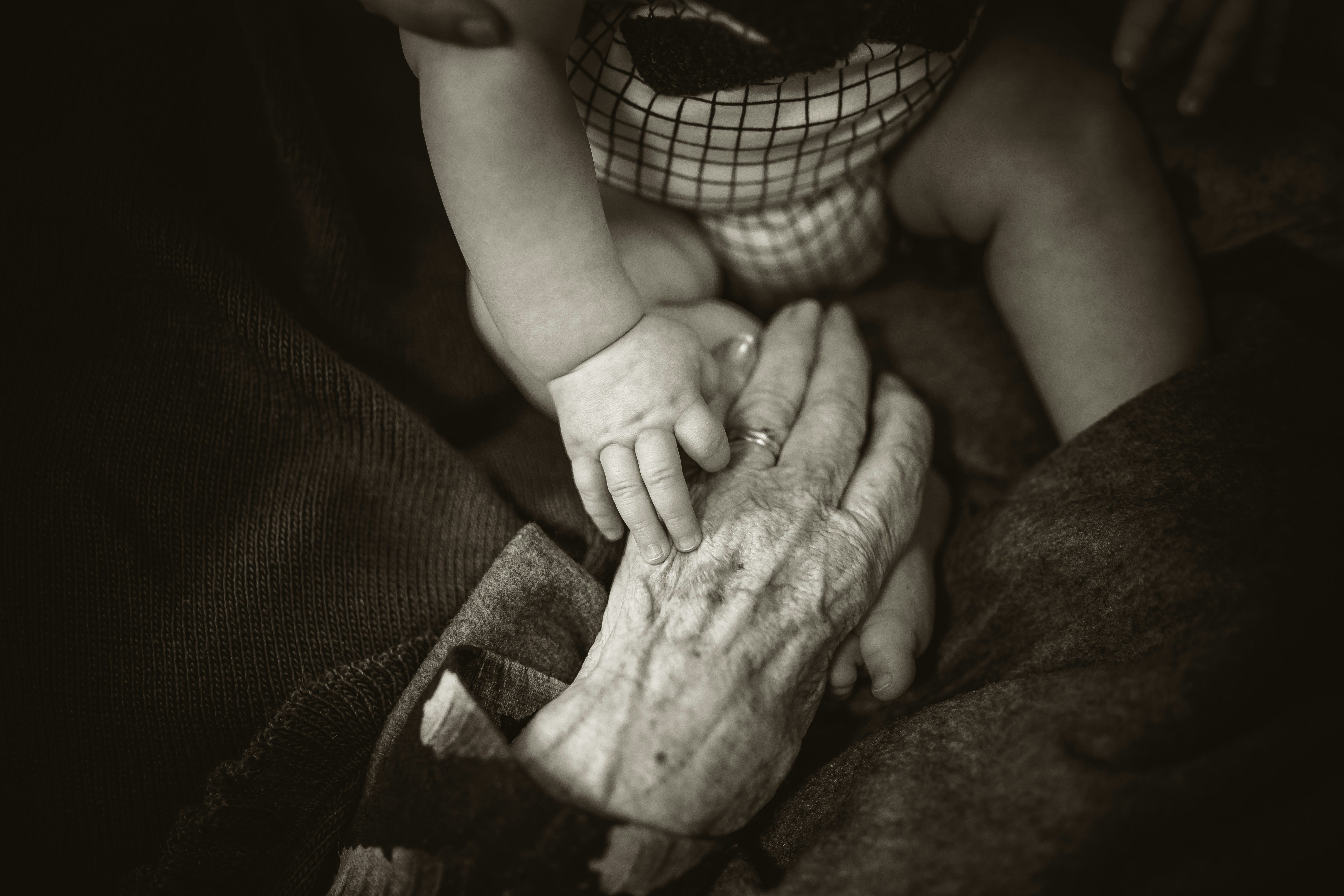
Ay, abuelita! I stroke her soft and wrinkly hand and lay down beside her –a girl and her grandma once again. She strokes my head and back, and I feel a gush of tears flowing into her pillow.
This touch.
Still worth her weight in gold.
My mother’s mother. My mother. My sisters. My aunts. Myself. My child.
All one through silat al-rahm. The golden sacred threads of the birthing womb.
Ya Allah. What a priceless gift.
Love this piece. Brought me back to my own care giving days for my maternal grandmother (Nani), for whom I used to bring a bedpan at night. She said that exact sentence to me once “I’ll never forget what you’ve done for me.” I think that’s the highest praise I’ve received to this day. I love your metaphor of the nested dolls. I can relate to feeling that my maternal aunts and Nani have all been my mothers. It makes me feel more inspired to treat them as such, and to stay in touch more. Thank you for that, Janan!
What a beautiful piece to share and so important to remember the cycle of life and how someday we will be an Abuelita. My own Abuelita was cared for by her 8 children to the very end SubhanAllah and she was strong and sound of mind. My mother was the closest to her but she never reached the point of physical incapability. I personally feel very disconnected from the elderly in my family or elderly in general as I didn’t have much experience with them growing up or a need to care for them. However, my oldest daughter Ameera, surprisingly, connected with them during her internship at a doctors office last year. She loved speaking with them and hearing their stories. This summer she is doing her CNA certification, and she was ridiculed by her younger cousins and some family members who said she would have to “wipe b*tt!” With exasperated and disgusted tones. Ameera was very patient with them and surprisingly did not pay any mind to these comments. I was taken aback by the great empathy my daughter seemed to have in her. During one of her clinicals, she went to a nursing home, she texted me saying how sad she was and how she wanted to cry for the state of the elderly in the home and how sad and lonely and neglected they were. She said if she even spoke one word to them their face would suddenly light up so happy to receive some attention. I told her what she was doing was so incredibly important regardless of what others may say or think and that one day we would all be in those shoes and don’t we want someone to show us care and compassion?. She understood this without me having to tell her but I think I was more trying to tell myself. I’m grateful for this experience she is getting that will build her capacity for human connection 💕